 Car Service Land Coupons for Oil change, Tires, Wheel alignment, Brakes, Maintenance
Last updated: June 22, 2026 | By: Jake Morrison
June 2026 update: re-confirmed the typical high-mileage oil upcharge and added more pricing detail to four of the FAQ answers below.
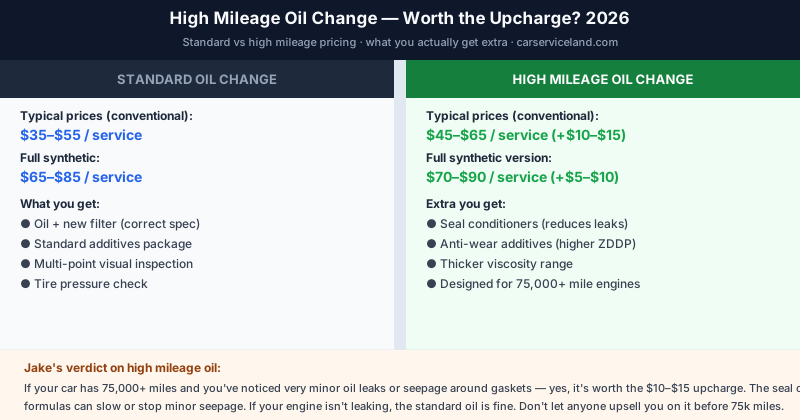
If your vehicle is over 75,000 miles and has minor oil seepage or you’re simply doing preventive maintenance on an older engine – yes, high mileage oil is worth the extra $10-$15. If your car is under 75k miles or has no aging-engine symptoms, standard synthetic is the right call and high mileage oil adds nothing useful.
I’ve seen people pay the high mileage premium on a 60,000-mile car in perfect condition and others skip it on a leaky 110,000-mile engine to save a few dollars. Neither makes financial or mechanical sense. The marker that actually matters isn’t the mileage number on the door sticker – it’s whether your engine is showing the symptoms that high mileage additives address: slight seepage around seals, minor leaks at valve covers, an engine that’s been through years of heat-and-cool cycles. A reader with a 2006 Camry at 125k emailed me after switching to high mileage oil for the first time. He said a small drip he’d noticed on his driveway for the past year had effectively stopped within a few months. Not dramatic, but real – and exactly what the seal conditioners are designed to do.
What High Mileage Oil Actually Does
High mileage oil isn’t synthetic dressed up in a different label. It has specific additives targeted at older engine problems: seal conditioners that help aging rubber gaskets stay pliable (reducing minor seepage), wear-reduction additives for older internal surfaces, and detergents that help clean out the gradual sludge buildup that develops in high-cycle engines.
The 75,000-mile benchmark is where all the major chains (Jiffy Lube, Firestone, Midas, Valvoline, Take 5, Pep Boys) converge. It’s a reasonable marker because that’s typically when aging patterns start to become relevant – seals that have gone through thousands of heat/cool cycles, piston rings that have seen wear, and the accumulated internal deposits of years of combustion.
When High Mileage Oil Is Worth It
The clear cases:
- Your vehicle has 75,000+ miles and you’re seeing elevated oil consumption between changes.
- You notice minor oil seepage around gaskets (oil film on the outside of the engine, small spots in the driveway) – not a serious leak, but a subtle one.
- The engine runs noisier than it used to, especially at cold starts.
- You’re committed to keeping the vehicle for another 50,000-100,000 miles and want to protect the remaining service life.
My ’09 Tacoma crossed 95k and I switched to Valvoline MaxLife on that one. The oil consumption was barely perceptible – maybe needing a half quart top-off between changes. High mileage oil is the right tool for that pattern. Not a repair. A maintenance upgrade that fits what the engine is doing. For Valvoline’s current MaxLife pricing and coupons, the Valvoline coupon details shows what your location is offering.
When It’s Probably Not Worth It
The cleaner opposite cases:
- The car crossed 75,000 miles but runs perfectly, consumes no oil between changes, and has no symptoms. High mileage oil may not hurt anything, but you’re paying extra for a problem you don’t have.
- You have a major mechanical issue – a cracked gasket, serious leak, or failed component. High mileage oil won’t fix that. It might mask a symptom for a brief period, but it’s not a repair.
- The owner’s manual points you toward a specific oil spec and high mileage doesn’t meet that spec. Always check compatibility.
How Much More Does It Cost?
| Chain | Conventional price | High mileage price | Difference |
|---|---|---|---|
| Pep Boys | $45.00 | $78.00 (HM synthetic blend) / $100.00 (HM full synthetic) | $33-$55 more |
| Jiffy Lube | Quote-based | Quote-based (higher tier) | Varies by location |
| Valvoline | Local pricing | MaxLife line – typically $10-$20 more than standard | Moderate premium |
The Pep Boys numbers are particularly useful here because they make something clear: “high mileage” isn’t one flat tier. High mileage synthetic blend ($78) and high mileage full synthetic ($100) are different products at different price points. Your choice within the high mileage category still depends on what the car actually needs. For a full look at the price gap between all oil types, the synthetic vs conventional oil change price guide has current chain-by-chain numbers.
The Common Mistake With High Mileage Oil
People use it as a repair tool when it’s a maintenance tool. If your car has a serious gasket leak – oil pooling, dripping, or running down the engine – high mileage oil won’t fix it. It wasn’t designed to. The seal conditioners in high mileage oil help aging rubber stay pliable and reduce minor seepage from micro-gaps that develop over years. That’s a real benefit for the right engine. But it cannot physically seal a gasket that’s failed.
I’ve seen people spend two years adding high mileage oil to a car with an active valve cover leak, watching it slowly get worse, wondering why the expensive oil wasn’t working. They needed a $200-$400 gasket job, not a $15 oil upgrade. High mileage oil is for maintenance and mild symptom management. If the leak is active enough to leave a visible puddle or require constant top-offs, that’s a job for a mechanic, not a product switch. If you’re trying to decide between high mileage and standard synthetic on a vehicle with miles but no symptoms, the high mileage vs synthetic oil change guide runs that comparison directly.
What Most Drivers Get Wrong About High Mileage Oil
Using mileage as the only trigger. High mileage oil is about seal conditioning and engine protection for engines that have accumulated wear – not about hitting an exact odometer number. Some engines benefit from switching at 60,000 miles if they’re burning a little oil or running hot. Others don’t need it until 100,000+. The better diagnostic: is the engine burning any oil between changes? Are there any signs of seeping gaskets? Is the car spending time in extreme heat? Those factors matter as much as the odometer. The secondary mistake is assuming high mileage oil requires a longer change interval. It doesn’t – follow the same interval as your standard oil specification, which for most modern vehicles is 5,000-7,500 miles.
Jake’s Take
If your car is over 75,000 miles and you’re not already on high-mileage oil, it’s worth switching. The seal conditioners in high-mileage blends address something real – older engines see more seepage around gaskets and valve seals, and conventional oil doesn’t do anything about that. Valvoline MaxLife is the easiest to find at a competitive price, and Jiffy Lube’s Signature Service High Mileage is the most common quick-lube option. The price premium over conventional is usually $10-$15. For an engine with 100,000 miles on it, that’s not a hard call.
Frequently Asked Questions
At what mileage should I start using high mileage oil?
The standard benchmark across all major chains is 75,000 miles. But mileage alone isn’t enough – look for actual symptoms like slightly elevated oil consumption, minor seepage, or increased engine noise. A 90,000-mile engine with no symptoms may not need it; a 70,000-mile engine with clear seepage might benefit from it now.
Can high mileage oil stop oil leaks?
It can help with minor seepage by conditioning aging rubber seals and gaskets. It cannot stop an actual structural leak – a failed gasket, cracked block, or damaged seal that requires physical repair. There’s a meaningful difference between “minor seepage” and “active leak.”
Is high mileage oil always synthetic?
No. It’s available in conventional, synthetic blend, and full synthetic versions. The “high mileage” designation refers to the additive profile, not the base oil chemistry. Pep Boys explicitly shows both high mileage blend and high mileage full synthetic on their menu.
What if my car is at 120,000 miles and I’ve never used high mileage oil?
It’s not too late to switch. If you’re not seeing symptoms, you can keep using whatever you’ve been using and it’s likely fine. If you are seeing symptoms – consumption, minor seepage, louder cold start – it’s worth making the switch at your next service.
Does switching to high mileage oil affect the recommended change interval?
Generally no – the change interval depends on the oil’s base chemistry (conventional, blend, or full synthetic) and your vehicle’s specs, not just the high mileage additive package. A high mileage full synthetic oil still carries the extended interval of standard full synthetic. A high mileage conventional oil still follows conventional intervals. The distinction is the additive package, not the interval. Check the specific product’s label for the manufacturer-listed interval and cross-reference with your owner’s manual. The how often should you change your oil guide covers the recommended intervals by vehicle type and oil grade.
Is Valvoline MaxLife the best high mileage oil?
It’s one of the most well-regarded options in the category – MaxLife has a long history and a specific formulation for aging engine seals. That said, “best” depends on your engine’s specific requirements. Castrol GTX High Mileage, Pennzoil High Mileage, and Mobil 1 High Mileage are all legitimate competitors with similar additive profiles. At a chain like Valvoline, you’ll get MaxLife by default. At Jiffy Lube, the brand varies by location. At most chains, you don’t choose the brand – you choose the tier. If you have a strong brand preference, buying the oil separately and bringing it to a shop for a BYOO (bring your own oil) service is an option, though not all shops accommodate this.
How much more does a high mileage oil change cost vs a standard oil change?
High mileage oil typically adds $5-$15 to the cost of a conventional oil change, depending on the chain. At Valvoline, a MaxLife high-mileage oil change runs roughly $15-$20 more than their standard conventional price. At Walmart, the high-mileage tier (where available) is minimal in premium. The cost difference is modest – high mileage oil costs slightly more to produce because of the added conditioners and seal-swelling additives. For a vehicle with legitimate high-mileage concerns, the premium is worth it. For a vehicle under 75,000 miles that doesn’t show any seepage, it’s extra money for additives you don’t need yet.
Can I use high mileage oil on a newer vehicle as a preventive measure?
Technically no – and not because it hurts, but because the seal-conditioning additives in high mileage oil work by slightly swelling rubber seals. On a new or low-mileage engine where seals are still pliable and not dried out, those additives don’t have a problem to solve. Using high mileage oil prematurely wastes the small premium and doesn’t offer the engine any benefit a quality full synthetic wouldn’t already provide. Save the high-mileage formulation for when it’s actually useful: visible seepage, odor of burning oil, or 75,000+ miles on conventional gaskets and seals.
Sources
Service and pricing information from official chain pages, June 2026.
- Jiffy Lube High Mileage Oil
- Firestone High Mileage Oil Change
- Midas High Mileage Oil Change
- Pep Boys Oil Changes

About the Author
Jake Morrison
Jake spent three years working the pit at a Jiffy Lube in Garland, Texas – which means he’s seen every oil change upsell in the book and knows exactly which ones are legitimate. His 2021 RAM 1500 5.7L Hemi takes 8 quarts of full synthetic, so he’s personally acquainted with how fast an advertised price can balloon at checkout. At carserviceland.com he tracks what chains actually post versus what drivers actually pay.