 Car Service Land Coupons for Oil change, Tires, Wheel alignment, Brakes, Maintenance
Last updated: June 22, 2026 | By: Jake Morrison
June 2026 update: re-confirmed Walmart and Pep Boys’ current pricing, refreshed the Firestone offer figure, and updated an outdated Take 5 coupon reference.
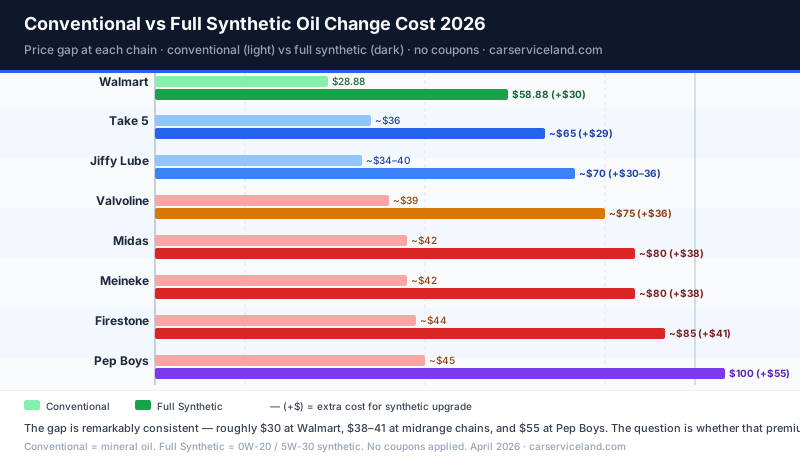
The real price gap between conventional and full synthetic at the same chain runs $30 to $55 depending on where you go. At Walmart: $28.88 conventional vs $58.88 full synthetic – a $30 difference. At Pep Boys: $45 vs $100 – a $55 gap. At Midas: ~$42 vs ~$80.
This page covers the head-to-head cost comparison at specific chains. For the decision of which oil type your vehicle actually requires, see synthetic vs conventional: when is it worth the extra cost. The pricing gap matters less than you think if your car requires synthetic – the “savings” from conventional oil disappear if it means changing it more frequently or risking a voided powertrain warranty. A reader with a 2016 Nissan Rogue learned this after two conventional oil changes under the belief he was saving money: his dealer flagged it on a service visit and noted the manufacturer specifically calls for 0W-20 full synthetic. The savings weren’t worth the warranty exposure.
Quick read: Pick full synthetic if your owner’s manual requires it, you do a lot of stop-and-go driving, or you want to stretch to 7,500+ miles between changes. Pick conventional if your manual explicitly allows it, your engine is older and naturally aspirated, and you don’t mind changing oil every 3,000-5,000 miles.
The Real Price Gap, Chain by Chain
| Chain | Conventional | Full synthetic | Gap |
|---|---|---|---|
| Walmart | $28.88 (Pit Crew) | $58.88 | ~$30 |
| Pep Boys | $45.00 | $100.00 | $55 |
| Firestone | Offer-led – current promos like $15 off any oil change | Offer-led synthetic model – harder to compare directly | Depends on active promotions |
| Jiffy Lube | Quote-based, no national flat price | Quote-based, positioned higher-tier | Location-dependent |
| SpeeDee | Higher-tier option positioning | Full synthetic sold as premium tier | Stronger dollar-off coupons for synthetic |
Walmart gives you the cleanest side-by-side because it’s a menu-price chain – no coupon hunting required. The gap there is about $30. At Pep Boys, the gap is $55. Both are real, but they represent different pricing models, not different versions of the same model.
Why Full Synthetic Costs More
Three reasons, in roughly this order of importance: the oil itself is more expensive to produce, it’s positioned as the premium engine-protection tier across the entire industry, and many modern vehicles specifically require it. Walmart calls full synthetic “the highest level of engine protection” on its service page. Pep Boys does the same. This isn’t just marketing – it reflects what the oil actually does differently at the molecular level.
When I was working at Jiffy Lube back in 2004, synthetic wasn’t something most customers thought much about. It was the expensive option people upgraded to. Fast forward twenty years and most cars rolling in already require it. My current RAM 1500 takes 8 quarts of full synthetic. There’s no conventional equivalent in the budget – the engine spec decides the oil type, not me. For modern recommended oil change intervals by oil type, the how often should you change your oil guide covers what manufacturers currently specify.
When the Higher Price Is Worth It
The honest answer: if your owner’s manual requires full synthetic, the conventional number is irrelevant. You don’t have a choice. The question of “is it worth it” doesn’t apply.
Where the decision actually exists is in vehicles that allow either conventional or synthetic. Modern turbocharged engines, vehicles that run in extreme heat or do heavy towing, and anything with tighter engine tolerances generally benefit meaningfully from synthetic even when the manual technically allows conventional. The longer drain intervals – typically 5,000-7,500 miles for conventional vs. 7,500-15,000 miles for full synthetic – also change the math when you factor in how often you’re paying for oil changes over time.
When Conventional Still Makes Sense
Older vehicles with simple naturally-aspirated engines that actually allow conventional. Drivers on a tight maintenance budget whose manual confirms conventional is acceptable. That’s about it. Conventional isn’t inherently bad oil – it’s just a worse fit for most cars made in the last decade or so.
If you’re driving a 2008 Corolla with 180,000 miles and the manufacturer spec allows conventional, there’s no shame in using it. But if your car requires 0W-20 full synthetic – and a lot of new vehicles do – conventional isn’t an option regardless of price.
The Comparison Trap to Avoid
The most common error I see in this comparison: someone finds Walmart’s $28.88 conventional and Pep Boys’ $100 full synthetic and concludes “synthetic costs $70 more.” It doesn’t. It costs $30 more at Walmart when you compare correctly. Pep Boys’ premium positioning inflates the number.
The second trap is comparing a plain menu price from one chain to a coupon-adjusted synthetic deal at another. A Firestone synthetic offer or Midas local coupon can make full synthetic look significantly cheaper than the menu price suggests – but only if you take the time to look at current offers and not just base pricing. The strongest oil change coupon tracks what’s currently active across Firestone, Midas, and Valvoline in one place.
The Five-Quart Baseline
One thing that often doesn’t make it into this comparison: most chain oil changes quote a 5-quart service. If your vehicle takes more – and a lot of trucks, SUVs, and V8s do – you’re paying for extra quarts at $8-$12 each on top of the base price. My RAM 1500 takes 8 quarts full synthetic. That extra-quart cost shows up at every chain and makes the “cheapest full synthetic” calculation more involved than a simple menu comparison. The full synthetic pricing details breaks down how quart overages affect the real bill at each major chain.
What Most Drivers Get Wrong About the Conventional vs Full Synthetic Cost Decision
Treating it as a pure cost-per-change decision. The question isn’t just “what does each oil change cost” – it’s what does each oil type cost over the vehicle’s maintenance cycle. Full synthetic at 7,500-mile intervals may cost the same annually as conventional at 3,000-mile intervals, or less. When you factor in the reduced number of changes per year, the annual cost comparison often eliminates the per-change price gap entirely. The other dimension people miss: switching from conventional to synthetic doesn’t hurt modern engines and can extend the useful life of engine components. The decision isn’t just about this year’s oil bill – it’s about what the engine looks like at 150,000 miles. Also: the sticker gap between conventional and synthetic looks much wider depending on which chains you compare. Walmart conventional vs Pep Boys synthetic produces a $71 difference. Walmart conventional vs Walmart synthetic is a $30 difference. The honest comparison is same chain, same quart count, different oil type – not the widest spread you can find across different shops.
Jake’s Take
The per-visit price difference between conventional and full synthetic is $25-$40 at most chains. The per-mile cost difference is much smaller once you factor in interval extension – conventional at 5,000 miles vs full synthetic at 7,500-10,000 means you’re doing 50-100% more oil changes per year on conventional. For most drivers on modern vehicles that specify full synthetic: the math favors synthetic even before you factor in the engine protection benefits. For older vehicles that accept conventional and don’t require synthetic: conventional is fine – and cheaper over time, no asterisk needed. Check the spec, not the sticker price.
Frequently Asked Questions
How much more does full synthetic cost than conventional?
It varies by chain and pricing model. The clearest public side-by-side is Walmart: $28.88 for conventional vs. $58.88 for full synthetic – roughly a $30 gap. Pep Boys shows a $55 gap. Most mid-tier chains fall somewhere between those two numbers.
Is it worth paying more for full synthetic?
If your car requires it, yes – because you don’t have a choice. If your car allows both, the math depends on your engine type, driving conditions, and how much you value longer drain intervals vs. lower immediate cost.
Can I save money by switching from full synthetic to conventional?
Only if your owner’s manual explicitly allows it. If the manual requires full synthetic, switching isn’t an option without risking your engine warranty and potentially causing long-term wear. Check the spec before you consider switching.
Does using conventional oil instead of synthetic void my car warranty?
If your owner’s manual specifies full synthetic, yes – using conventional oil can void powertrain warranty coverage for resulting engine damage. The manufacturer sets the oil specification, not the service chain. Before making any switch in oil type, read the oil spec section of your owner’s manual. If it says “0W-20 full synthetic” or similar, that’s a hard requirement, not a suggestion. Using conventional oil to save $30 and risking warranty coverage on a $4,000 powertrain repair is not a trade-off that works out.
Which chain has the cheapest full synthetic oil change when you factor in coupons?
Walmart’s $58.88 menu price is the lowest publicly-listed full synthetic price without any coupon work. With coupons, Firestone’s current promotions, local Valvoline store deals ($15 off), and Midas local offers can bring synthetic into the $55-$65 range – competitive with Walmart. Take 5 mostly runs smaller dollar-off offers ($5-$7 off) plus a 25% discount for veterans and military, not a broad synthetic discount, so on its own it rarely beats Walmart’s menu price. No single chain consistently wins on coupon-adjusted synthetic price across all markets; the answer depends on what’s running at your nearest locations when you’re ready to schedule.
At what mileage point does switching from conventional to full synthetic start to pay for itself?
The math hinges on drain intervals. If you’re changing conventional oil every 3,000 miles at $40 per visit, you’re spending $0.013 per mile on oil changes. If you switch to full synthetic at $70 per visit and extend to 7,500 miles between changes, you’re spending $0.0093 per mile – cheaper per mile even though it costs more upfront. The crossover point typically arrives around the second or third synthetic change, when the extended interval savings have compounded enough to offset the higher per-visit price. For vehicles that can stretch to 10,000-mile intervals on full synthetic, the math gets even more favorable. The savings aren’t dramatic, but they’re real over the life of the vehicle.
Does the price gap between conventional and full synthetic narrow with coupon promotions?
Sometimes, but usually not enough to flip the comparison. A coupon that saves $15 off full synthetic at Jiffy Lube still leaves full synthetic $20-$25 more expensive than the conventional price on the same day at the same location. The coupon helps, but it doesn’t close the gap entirely. Where coupons can meaningfully shift the math: if a chain runs a flat-price promotion on full synthetic (like “$49.99 full synthetic this month only”), the per-visit price gap shrinks to almost nothing compared to standard conventional, and the longer interval advantage of synthetic makes the coupon deal the obvious choice. Check local store pages for this type of limited-time offer – they appear a few times per year at most chains.
Sources
Pricing from official chain service pages, June 2026. Firestone and Jiffy Lube use offer-based and quote-based models respectively; pricing reflects current verified signals rather than invented national averages.
- Walmart Oil Change Service
- Pep Boys Oil Change Service
- Firestone Oil Change Coupons
- Jiffy Lube Oil Change
- SpeeDee Oil Change Service

About the Author
Jake Morrison
Jake spent three years working the pit at a Jiffy Lube in Garland, Texas – which means he’s seen every oil change upsell in the book and knows exactly which ones are legitimate. His 2021 RAM 1500 5.7L Hemi takes 8 quarts of full synthetic, so he’s personally acquainted with how fast an advertised price can balloon at checkout. At carserviceland.com he tracks what chains actually post versus what drivers actually pay.