 Car Service Land Coupons for Oil change, Tires, Wheel alignment, Brakes, Maintenance
Last updated: June 22, 2026 | By: Jake Morrison
June 2026 update: added a concrete real-world cost example to one of the FAQ answers below.
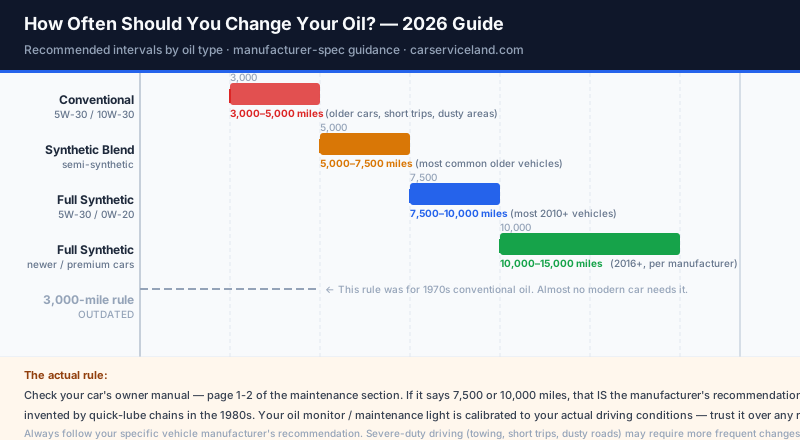
Most modern vehicles: every 7,500-10,000 miles on full synthetic, or when the oil-life monitor says to. Older vehicles on conventional oil: 5,000-7,500 miles. The 3,000-mile rule is outdated for most cars built after 2010.
The 3,000-mile rule kept a lot of Jiffy Lube bays busy for decades – including mine in Garland. And I’ll be straight with you: in 2004, it was a perfectly defensible recommendation. Older engines, conventional oil, lower manufacturing tolerances – 3,000 miles wasn’t unnecessary. It was sensible maintenance for the vehicles of that era. But I still hear from readers doing 3,000-mile intervals on a 2019 Honda CR-V with a factory oil-life monitor. That monitor exists because Honda’s engineers determined the actual safe interval is longer. Overriding it with a schedule from two decades ago isn’t being cautious – it’s spending money on oil changes your engine doesn’t need.
What Modern Guidance Actually Says
| Source | Current guidance |
|---|---|
| Midas | Many vehicles from the past decade often fall in the 5,000-7,500 mile range; some go longer |
| Pep Boys | Some modern vehicles can go 7,500, 10,000, or even 15,000 miles between changes |
| Jiffy Lube | Correct interval depends on vehicle, oil type, and driving conditions – owner’s manual first |
| Walmart | Frequency depends on year, make, model, and driving conditions – no universal interval |
Why the 3,000-Mile Rule Is Outdated for Most Cars
Three things changed simultaneously: engine manufacturing tolerances got tighter (less metal-on-metal contact, less contamination), synthetic oil became the standard in modern vehicles (lasts longer and degrades more slowly), and oil-life monitoring systems replaced time-based guessing with actual chemistry and condition tracking.
Toyota, Honda, GM, Ford – most major manufacturers now specify 5,000-7,500 mile oil change intervals for typical conditions, with some vehicles rated for up to 10,000-15,000 miles with full synthetic. The car manufacturer engineers designed the service schedule. That trumps what a 30-year-old industry practice assumed for engines that no longer exist in new cars.
What Actually Determines Your Real Interval
Four things, in order of importance:
1. Your owner’s manual. This is non-negotiable as the primary source. The manufacturer tested the engine, specified the oil, and set the interval. It’s the most accurate answer for your specific car.
2. Your oil-life monitor (if your car has one). Modern oil-life monitoring systems calculate maintenance timing using actual driving data – not just odometer miles, but cold starts, idle time, engine temperature, and operating conditions. When the monitor says change the oil, change the oil. When it doesn’t, you don’t need to.
3. Your oil type. If you’re running conventional oil, shorter intervals are likely appropriate (3,000-5,000 miles depending on vehicle). Full synthetic supports longer intervals in most modern applications. For how the price difference between oil types breaks down at major chains, the synthetic vs conventional oil change price guide has the comparison.
4. Your driving conditions. Short trips under 10 minutes (the engine never fully warms up), lots of idling, extreme heat or cold, frequent towing – these all put more stress on oil than regular highway driving. “Severe service” conditions in your manual often specify a shorter interval than the standard recommendation.
The Time Factor People Forget
Oil doesn’t just age by miles. It ages by time too. If you drive 4,000 miles a year – maybe you’re retired, work from home, or just don’t use the car much – you still need to change the oil once a year even if you haven’t hit the mileage target. Oil absorbs moisture, combustion gases, and other contaminants just from sitting in the engine. Most manufacturers specify both a mileage limit and a time limit (commonly once a year or every 12 months), whichever comes first. For what each chain includes beyond the basic oil and filter, the what’s included in an oil change guide breaks it down by chain.
The Right Process in 3 Steps
- Open the owner’s manual and find the maintenance schedule section. Look for the oil change specification: oil type, viscosity, and recommended interval under both normal and severe conditions.
- If your car has an oil-life monitor, let it drive the timing under normal use. Reset it properly after every change.
- Adjust for actual driving conditions if they’re actually severe – not as an excuse to change oil more often than needed, but as a real acknowledgment if your driving fits the “severe service” definition in the manual.
What Most Drivers Get Wrong About Oil Change Intervals
Following the 3,000-mile rule on a modern vehicle. That interval made sense for conventional oil in engines from the 1980s. Most vehicles built after 2010 on full synthetic are designed for 7,500-10,000 mile intervals, and some go to 15,000. Changing every 3,000 miles on a modern engine costs you an extra $120-$150 per year with zero mechanical benefit – you’re disposing of oil that still has thousands of miles of useful life left. The number that actually matters is in your owner’s manual under “oil change interval.” That number reflects your engine’s tolerances and your oil type. The sticker the oil change shop puts on your windshield reflects their business model, not your vehicle’s engineering specs.
Jake’s Take
The 3,000-mile rule is dead. It exists now as a marketing tool for quick-lube chains, not as engineering guidance. Most modern vehicles on full synthetic go 7,500-10,000 miles between changes, and some go longer. The number that matters is in your owner’s manual under “oil change interval” – not what the sticker on your windshield says, not what the shop recommends verbally. If you don’t have the manual, look it up by year/make/model. Following the manufacturer interval is both the correct approach and often the cheaper one, since you’re doing fewer changes per year.
Frequently Asked Questions
Is every 3,000 miles still the right interval?
For most modern vehicles, no. Current guidance from every major chain and manufacturer points to 5,000-7,500 miles as the typical range for newer cars, with some going longer. 3,000 miles may still make sense for older vehicles on conventional oil or with specific driving patterns – but it’s not the universal default it was 20 years ago.
How do I know if my driving counts as “severe service”?
Most manufacturers define it similarly: lots of short trips under 10 miles, frequent cold starts, extended idling (taxis, delivery vehicles), towing or hauling regularly, driving in extreme temperatures or dusty conditions. If several of these apply to you, use the severe service interval in your manual.
Can I go longer than the manual says if I use better oil?
No. Using better oil than specified is fine. Using it as justification to stretch beyond the manufacturer’s interval is not – and doing so can void warranty coverage for oil-related engine issues.
Do oil change chains benefit from you coming in more often than necessary?
Yes, financially – every extra visit is revenue. That’s not a conspiracy; it’s just how any service business works. On the 3,000-mile rule alone, that’s roughly 4 visits a year on a typical 12,000-mile driver instead of 1.5-2, which is where that $120-$150-a-year overspend in the section above actually comes from. The reason I bring it up is that the people recommending your service interval at a quick-lube chain have an incentive structure that doesn’t perfectly align with yours. The oil-life monitor in your car has no financial stake in the answer. Your owner’s manual was written before anyone tried to sell you anything. Those are the sources I’d trust over a shop recommendation, especially when the shop’s suggestion is more frequent than the manufacturer’s recommendation.
What’s the right oil change interval if I drive very little – under 5,000 miles a year?
Annually – once every 12 months regardless of mileage, or whatever the time-based limit in your manual is (many say 12 months or X miles, whichever comes first). Oil degrades over time even without accumulating miles. Moisture from cold starts, combustion gases, and general oxidation affect oil quality independently of how many miles you’ve driven. If you drive 3,000 miles a year, don’t go two years between changes thinking you haven’t “used” the change interval. Time still matters. And when you do go in, the current best oil change deal tracks current deals across all major chains.
Does my car have an oil life monitoring system, and should I trust it?
Most vehicles made after 2008 have an oil life monitoring system (OLM) – it shows as a percentage on the dashboard or trip computer. These systems use algorithms that track driving conditions (temperature, load, idle time, short trips vs highway) to estimate actual oil degradation – they don’t just count miles. The percentage displayed is a genuine engineering-based estimate, not a sales tactic. Yes, you should trust it: if your OLM says 40%, your oil is still doing its job and an early change is wasted money. When it hits 15-20%, start planning the change. At 0% or “change oil now,” do it. The OLM is more accurate than any fixed-mileage rule for your actual driving conditions.
Can I go longer between oil changes in the summer vs the winter?
Counterintuitively, winter driving is often harder on oil than summer in most of the US. Short cold-weather trips mean the engine takes longer to reach operating temperature, which means more condensation and fuel dilution in the oil before it’s hot enough to burn them off. Pure highway summer driving is relatively easy on oil. But the manufacturer’s interval accounts for these seasonal variables across a range of typical driving patterns – you don’t need to manually adjust intervals by season unless you’re tracking wear via oil analysis. Follow the manual or OLM, not the calendar.
Sources
Service interval information from official chain pages, June 2026.

About the Author
Jake Morrison
Jake spent three years working the pit at a Jiffy Lube in Garland, Texas – which means he’s seen every oil change upsell in the book and knows exactly which ones are legitimate. His 2021 RAM 1500 5.7L Hemi takes 8 quarts of full synthetic, so he’s personally acquainted with how fast an advertised price can balloon at checkout. At carserviceland.com he tracks what chains actually post versus what drivers actually pay.