 Car Service Land Coupons for Oil change, Tires, Wheel alignment, Brakes, Maintenance
Last updated: June 22, 2026 | By: Jake Morrison
June 2026 update: clarified what Walmart’s courtesy check actually includes, and separated which oil-change inclusions are universal across chains versus chain-specific.
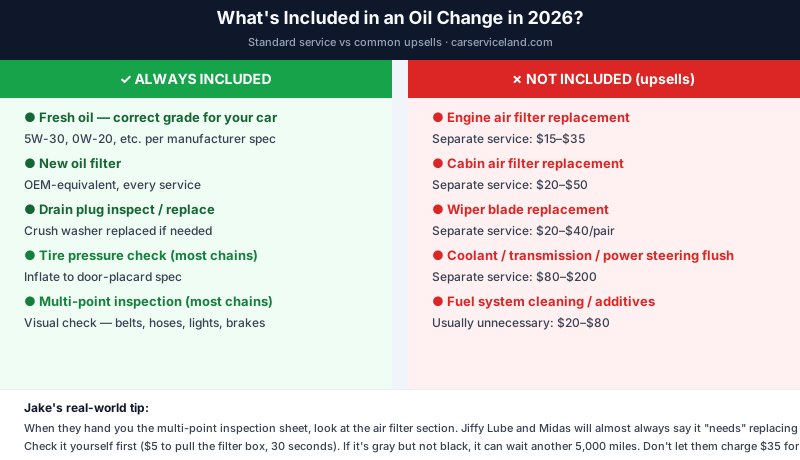
Every oil change includes the oil drain, new filter, and refill. What varies – sometimes significantly – is everything that comes alongside it: inspections, top-offs, tire pressure, and multi-point checks. Jiffy Lube and Valvoline bundle more into the in-bay experience. Walmart’s courtesy check is actually one of the longer lists in the industry, it’s just framed as a retail checklist instead of a “service.” Pep Boys and Firestone include courtesy vehicle inspections.
When I was working at Jiffy Lube in Garland, we’d occasionally have a customer come in and ask why their bill was higher than they expected. Usually it came down to one thing: they assumed “oil change” meant exactly one thing, and it doesn’t. I remember one woman who was surprised the service included a brake inspection and tire pressure check – she’d been going somewhere else that didn’t mention either, so the documentation felt like an upsell even when nothing needed attention. That documentation was free. She just hadn’t expected it. The gap between “oil + filter” and “full service oil change” is real, and it’s worth knowing before you walk in.
What’s Almost Always Included (The Floor)
Three things should be in any oil change, regardless of where you go or what the service costs:
- Draining the old oil
- Installing fresh motor oil of the correct type and quantity
- Replacing the oil filter
If a shop isn’t clearly including all three, that’s not a standard oil change. Everything else – inspections, fluid top-offs, tire checks – is value added on top of that baseline.
What Each Major Chain Includes (June 2026)
| Chain | Core inclusions | Service model |
|---|---|---|
| Walmart | Oil, filter, chassis lube, 10-item courtesy check (battery, air filter, wiper blades, lights, transmission/power-steering/differential fluid, washer fluid, tire pressure) | Retail checklist model |
| Jiffy Lube | Oil, filter, fluid inspections and top-offs, tire pressure check, exterior windshield cleaning, multi-point inspection | Full-service quick-lube package |
| Valvoline | Oil, filter, fluid checks, tire pressure, battery check, in-car service | Stay-in-car full-service model |
| Take 5 | Oil, filter, fluid top-offs, tire pressure, multi-point inspection | Drive-through speed model |
| Pep Boys | Up to 5 quarts of oil, new filter, courtesy inspection, free tread depth and pressure check | Service-center package |
| Firestone | Oil, filter, courtesy vehicle inspection (fluid levels, belts, filters, lights, tires) | Inspection-led service-center model |
| Midas | Up to 5 quarts of oil, filter, fluid top-offs, tire pressure, Closer Look Vehicle Check (brakes, battery, belts, hoses) | Inspection-included service model |
| Meineke | Oil, filter, tire pressure, fluid checks, washer fluid, tire rotation, visual brake check, 23-point inspection | Package with rotation included |
The Inspection Layer: Real Value or Theater?
Honest answer: it depends on the shop and the inspector. A legitimate Firestone courtesy inspection or Midas Closer Look check by an experienced tech can catch things early – a marginal battery, worn belts, low brake fluid – that save you money or a breakdown down the road. At a quick-lube chain turning cars every 10-15 minutes, the “multi-point inspection” is often more of a quick visual sweep.
Neither is dishonest. They’re just different things. The service-center inspection (Firestone, Pep Boys, Midas) is more likely to catch something real. The quick-lube inspection is a courtesy check, not a diagnostic. For a current price breakdown showing what each chain charges for their full oil change package, the compare oil change costs has all the numbers in one place.
What Usually Costs Extra
This is where most billing surprises happen:
Extra oil quarts. Most oil change packages include up to 5 quarts. If your engine takes more – many trucks and SUVs take 6-8 quarts, my RAM 1500 takes 8 – the additional quarts are typically charged separately. This can add $5-$20 depending on oil type and how far over 5 quarts you go.
Premium oil filter. The standard package usually includes a standard filter. If your vehicle requires a premium or cartridge-style filter, that costs more.
Oil type upgrade. The advertised price is usually for conventional or, at some chains, synthetic blend. Full synthetic for a vehicle that requires it can be $20-$40 more than the ad price. For current full synthetic pricing across all major chains, the full synthetic cost page has what you need.
Tire rotation. At most chains this is an add-on, not standard. Meineke includes it in their package; most others don’t. Expect $15-$25 if you want it – the free tire rotation guide shows which chains throw it in at no charge and what the conditions are.
Any repairs found during the inspection. Inspections are included. Repairs from what the inspection finds are not – those are separate estimates and separate decisions.
What’s Almost Never Included
Jiffy Lube’s FAQ explicitly states tire rotation is not part of their Signature Service oil change – it’s a common enough assumption that they addressed it directly. Unlimited oil is another one. And any repairs discovered during the courtesy inspection are separate from the oil change price regardless of which chain you use.
What Most Drivers Get Wrong About Oil Change Inclusions
The advertised price is built around a 5-quart engine with a standard filter and conventional or blend oil. If any of those three things is different for your car, the advertised price isn’t your price. This trips up truck owners constantly. My RAM 1500 takes 8 quarts. Every standard 5-quart package is just the starting point – the rest is priced per quart. An engine that takes 7 quarts is paying for 2 extra quarts at every visit, typically $3-$6 each. Over a year of twice-yearly changes, that’s an extra $12-$24 annually that never shows up in the comparison. The same logic applies to filter type and oil grade.
The quick fix: look up your vehicle’s specific oil capacity and type in your owner’s manual before you compare prices. Then call the chain and ask what they charge for your actual vehicle – not the advertised starting package. That’s your real price. And if you’re also unsure how often you should actually be coming in, the how often should you change your oil guide covers the manufacturer-recommended intervals by oil type.
Jake’s Take
What’s “included” varies more than most people expect. Every chain covers the oil and filter – that part’s universal. But tire pressure checks, fluid top-offs, and multi-point inspections range from mandatory inclusions to upsell opportunities depending on where you go. Firestone and Pep Boys build inspection into every visit. Quick-lube chains like Valvoline and Jiffy Lube do a visual check but don’t always put it in writing. Before you show up, ask what’s included at the specific tier you’re booking – not the premium tier, your actual tier. That one question prevents a lot of post-visit confusion about what you paid for.
Frequently Asked Questions
Does an oil change include a new filter?
Yes, at every major chain. A new oil filter is part of every standard oil change. There is no major chain that changes the oil and reuses the old filter.
Is tire rotation included in an oil change?
At most chains, no – it’s an add-on. Meineke includes it in their standard packages, which is one reason their all-in price can look competitive. At Jiffy Lube, Valvoline, Take 5, Firestone, and Pep Boys, expect to pay extra for rotation if you want it done at the same visit.
What’s the difference between a courtesy inspection and a real inspection?
A courtesy inspection is a quick visual check included as part of the oil change at no extra charge. It can identify obvious issues but isn’t the same as a full diagnostic inspection. A real repair-focused inspection is typically charged separately and takes more time.
Why does my oil change cost more than the advertised price?
Most commonly: your engine needs more than 5 quarts (the standard included amount), or your vehicle requires full synthetic but the ad price was for conventional or blend, or you needed a premium filter. These additions are standard across the industry – always ask about your specific vehicle’s requirements before assuming the ad price is your final price.
Do oil change chains check the air filter as part of the service?
Most include an air filter inspection – a visual look to see if it’s dirty. At Walmart, it’s explicitly part of the courtesy check list. At Jiffy Lube and Valvoline, techs check it during the multi-point inspection and will tell you the condition. What no chain includes is replacing the air filter – that’s a separate purchase and add-on labor charge. A new cabin air filter or engine air filter typically runs $15-$30 in parts plus labor. They’ll mention it if it needs replacing, but it won’t be included in the oil change price.
What happens to the old oil when they drain it?
It gets recycled. All major chains collect used motor oil for recycling – it’s required by EPA regulations and standard industry practice. You don’t pay for disposal at most chains; it’s factored into the service cost. Some chains (like Pep Boys and Firestone) explicitly list “fluid disposal” as an inclusion. At chains that charge a separate disposal fee (which some Midas and Meineke locations do), that fee is typically $1-$5 added at checkout. If a chain shows a low oil change price and adds a $5 disposal fee at the end, the total is usually still competitive – just not quite as clean as the headline price.
Is the oil change sticker they put on my windshield accurate for my next change interval?
Not always – and this is a common source of unnecessary early oil changes. The sticker reflects whatever interval the shop defaulted to when they printed it, which is often 3,000 miles regardless of what oil type was used. If you got a full synthetic oil change and your manual says 7,500-10,000 miles, but the sticker says 3,000 miles, follow your manual, not the sticker. The sticker is a service reminder, not an engineering document. Some quick-lube chains have moved toward sticker intervals that match the actual oil life – but if you’re ever unsure, your owner’s manual and your vehicle’s oil life monitor (if equipped) are the authoritative sources.
Does getting an oil change at a chain automatically reset my oil life monitor?
It depends on the chain and your vehicle. Most quick-lube techs are trained to reset the oil life monitor (OLM) as part of the service – it’s standard at Valvoline, Jiffy Lube, and most Firestone locations. But it doesn’t always happen, and on some European vehicles the reset requires a specific menu sequence that not every tech knows. When you pick up your car, check your dashboard oil life display. If it’s still showing a depleted reading after the oil change, ask the tech to reset it before you leave. It’s a 30-second procedure, not a hassle.
Sources
Service inclusion details from official chain pages, June 2026.
- Walmart Auto Services
- Jiffy Lube Oil Change
- Pep Boys Oil Changes
- Take 5 Oil Change
- Firestone Oil Change Services
- Meineke Oil Change Services

About the Author
Jake Morrison
Jake spent three years working the pit at a Jiffy Lube in Garland, Texas – which means he’s seen every oil change upsell in the book and knows exactly which ones are legitimate. His 2021 RAM 1500 5.7L Hemi takes 8 quarts of full synthetic, so he’s personally acquainted with how fast an advertised price can balloon at checkout. At carserviceland.com he tracks what chains actually post versus what drivers actually pay.