 Car Service Land Coupons for Oil change, Tires, Wheel alignment, Brakes, Maintenance
Last updated: June 13, 2026 | By: Jake Morrison
June 2026 update: brake pad lifespan data and warning sign guidance reviewed.
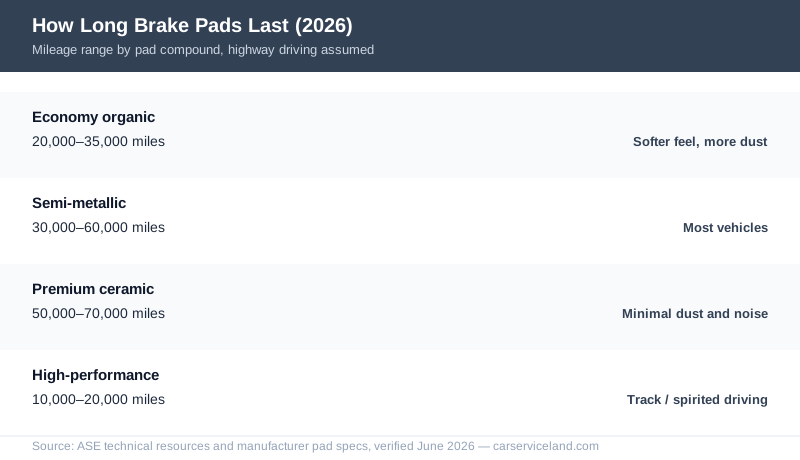
Brake pads last: 20,000-35,000 miles for economy organic pads, 30,000-60,000 miles for semi-metallic, and 50,000-70,000 miles for premium ceramic pads. City driving with frequent stops cuts lifespan by 30-40% compared to highway driving. Warning signs appear before complete failure – squealing means the wear indicator is active; grinding means the pad is gone and rotor damage is happening now. See brake pad replacement cost for what to expect at the shop when it’s time.
The range between 20,000 and 70,000 miles is huge – and both ends are real. A taxi driver doing stop-and-go city routes may go through a set of economy pads in 18 months. A highway commuter in a lighter car with premium ceramics might not need brake work for six or seven years. Driving style, vehicle weight, and pad compound together determine which end of the range applies to your specific situation. There’s no single answer that works for everyone.
I put about 18,000 miles per year on the RAM 1500, split roughly 60% highway and 40% city. Front pads on the truck have lasted about 45,000 miles on semi-metallic compounds, which tracks with the expected range for that driving mix and a heavier vehicle. Rear pads are still at about 60% at 45,000 miles – consistent with the front-axle bias in braking load I described in the brake pad cost guide. Every vehicle and driver combination produces its own wear pattern.
Brake Pad Lifespan by Pad Type
| Pad Type | Typical Lifespan | Best For | Trade-offs |
|---|---|---|---|
| Economy organic / non-asbestos | 20,000-35,000 miles | Light vehicles, mild driving | Softer stopping feel; wears faster; generates more dust |
| Semi-metallic | 30,000-60,000 miles | Most vehicles, varied driving | Better stopping power; can be slightly noisier in cold weather |
| Premium ceramic | 50,000-70,000 miles | Daily drivers, highway use | Minimal dust and noise; gentler on rotors; higher upfront cost |
| High-performance (track compound) | 10,000-20,000 miles | Performance vehicles, spirited driving | Excellent fade resistance; wear faster in street use; may squeal when cold |
How Driving Style Affects Brake Pad Wear
The biggest variable in brake pad life isn’t the pad compound – it’s how the driver uses the brakes. Drivers who brake early and gradually, coasting down from highway speeds before gentle braking at a light, generate far less heat in the brake system than drivers who accelerate hard and brake hard at the last moment. Heat is what degrades brake pads. The aggressive driver will go through a set of semi-metallic pads in 30,000 miles; the smooth driver on the same pads in the same vehicle might reach 55,000 miles. Same vehicle, same pads, radically different outcomes.
City driving amplifies this because the stop frequency is much higher. A driver doing 15,000 city miles per year might make 200-300 brake applications per day. A highway commuter doing the same mileage might make 30-50. The cumulative heat exposure over a year is dramatically different, and it shows up in wear rate.
The Warning Signs in Order
Brake pads give you a clear sequence of warnings as they wear down. First: the wear indicator squeals – a thin metal tab built into most pads that contacts the rotor when the pad is down to its last 2-3mm of friction material. This squealing is designed to be audible and consistent, especially on cold starts. It means schedule service soon – you have time, but not months. Second: if you ignore the squealing, the friction material eventually wears completely through and the metal backing plate contacts the rotor directly. This produces a grinding sound and active rotor damage. Every mile driven in this condition deepens grooves into the rotor, turning what would have been a pad replacement into a pad-plus-rotor replacement. Third comes brake pedal pulsation and reduced stopping power, which means the rotor surface is now uneven from the damage.
What Most Drivers Get Wrong About Brake Pad Lifespan
The most expensive mistake is treating the squealing warning as optional information rather than an action trigger. I’ve watched customers come in for oil changes and mention “there’s been a squeal for a couple months but the brakes still feel fine.” By that point, the inspection reveals pad metal contacting rotor – what should have been a $160 pad job is now $350 because the rotors need replacement. For current pad-only vs pad-plus-rotor pricing at Firestone and other major chains, the Firestone brake cost page has verified numbers across service tiers. The squeal is the pad’s designed warning with several hundred miles of buffer still built in. Waiting until the squeal becomes a grind eliminates that buffer and adds rotor replacement to the bill.
The second mistake is assuming that because the brakes feel fine, they must be fine. Brake feel degrades gradually as pads wear – most drivers adapt to slightly longer stopping distances without noticing the change because it happens over tens of thousands of miles. A vehicle with 5mm of pad remaining stops noticeably less sharply than a vehicle with 10mm, but the driver who’s been in that car every day may not perceive the change. Annual inspections – or at every tire rotation – catch wear before it reaches the warning stage rather than reacting to it afterward. For what brake inspections and any service will run at chains near you, the local brake price guide covers current rates so you know what’s reasonable before you go in.
Frequently Asked Questions
How do I know if my brake pads need to be replaced?
Listen for squealing when you brake – that’s the wear indicator and means you’re in the replacement window. Grinding means the pad is gone and rotor damage is active. Visual inspection through the wheel spokes can also show pad thickness; less than 3mm remaining is replacement territory. A free brake inspection at any brake shop or tire center will catch wear before the audible warning appears.
Do rear brake pads wear out as fast as front pads?
No – on most front-wheel-drive and front-heavy vehicles, rear pads wear significantly more slowly than fronts because the front brakes do most of the stopping work. It’s common for front pads to be replaced twice before rear pads need attention. All-wheel-drive and rear-wheel-drive vehicles distribute braking more evenly but fronts still typically wear first.
Can I drive with worn brake pads?
Briefly, while scheduling service – yes. Long-term, no. Pads at the squealing stage have a reasonable safety margin remaining. Pads at the grinding stage are damaging rotors with every stop and represent a real safety concern, as stopping distances increase and rotor failure can occur suddenly. If you’re hearing grinding, service is urgent – not a “get to it next week” situation.
How can I make my brake pads last longer?
The most effective technique is smoother, earlier braking – decelerating gradually over more distance rather than hard stops at the last moment. On highways, coasting down from speed before applying brakes reduces heat buildup significantly. Avoiding “left-foot braking” (resting the foot on the brake pedal while driving) eliminates continuous low-pressure brake drag that wears pads and heats rotors unnecessarily. Proper braking technique is worth 20-30% more pad life on the same compound in the same vehicle.
Does towing or carrying heavy loads wear out brake pads faster?
Yes, noticeably. Towing adds trailer weight that the brakes have to stop on top of the vehicle’s own mass, and that extra kinetic energy gets converted to heat at the pads and rotors on every stop. I’ve pulled a small utility trailer with the RAM on weekend trips, and the front pads showed visibly more wear after a summer of regular towing than they would have hauling nothing – I’d estimate 15-20% faster wear over that stretch, though I didn’t track it precisely enough to give an exact mileage figure. If you tow regularly, budget for brake service sooner than the mileage range on this page suggests, and consider a higher-temperature pad compound rated for towing use.
Do heavier vehicles wear through brake pads faster than smaller cars on the same pad type?
Generally, yes, all else being equal. A full-size truck or SUV has more mass to decelerate than a compact sedan, so the same semi-metallic pad compound that lasts 50,000-60,000 miles in a Civic might only reach 35,000-45,000 miles in a half-ton truck under similar driving conditions. This is part of why heavier vehicles often ship with larger front calipers and thicker pads from the factory – the engineering compensates for the added mass, but it doesn’t eliminate the wear difference entirely.
Does rainy or wet weather affect how fast brake pads wear?
A little, but less than most people assume. Wet rotors can temporarily reduce initial bite, which sometimes leads drivers to press the pedal harder or brake earlier and more frequently in the rain – and that added brake usage, not the water itself, is what adds incremental wear. The bigger weather-related factor is actually winter road salt, which can accelerate rotor corrosion and indirectly shorten effective pad life by creating an uneven surface for the pad to grip. Regular driving washes light surface rust off quickly, but a car parked for weeks in salty slush is where this becomes a real issue.
Sources
Brake pad lifespan data from ASE technical resources and manufacturer pad specifications, June 2026.

About the Author
Jake Morrison
Jake spent three years working the pit at a Jiffy Lube in Garland, Texas before switching to full-time automotive writing. He has personally used Walmart, Valvoline, Firestone, Midas, Meineke, and Jiffy Lube – and driven everything from a beat-up ’98 Civic to his current 2021 RAM 1500 5.7L Hemi. At carserviceland.com he covers what chains actually charge versus what they advertise.