 Car Service Land Coupons for Oil change, Tires, Wheel alignment, Brakes, Maintenance
Last updated: June 22, 2026 | By: Jake Morrison
June 2026 update: re-confirmed Walmart’s AGM vs. standard battery pricing, added a note on group-size pricing differences, and added a quick pick-AGM/pick-standard summary near the top.
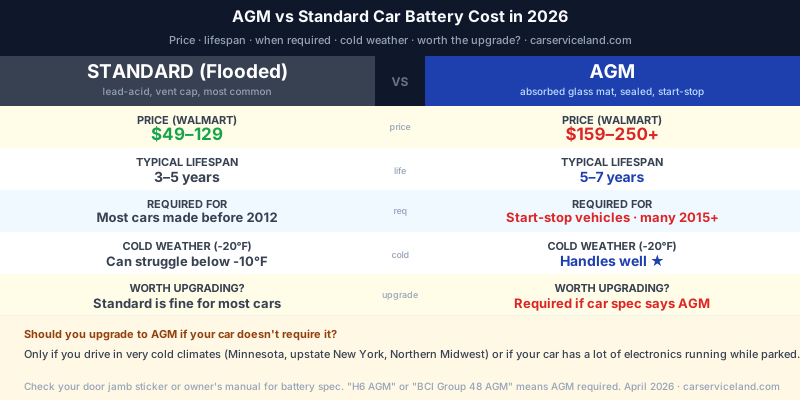
Standard flooded battery (EverStart Value at Walmart): ~$81. AGM (EverStart Platinum): ~$189 – more than double. The premium is real. Whether it’s worth it depends entirely on what your vehicle requires – which is a specification question, not a preference question.
AGM isn’t a better standard battery. It’s a different chemistry that specific vehicles require – particularly start-stop systems and vehicles with higher electrical demands. Putting a conventional flooded battery in a vehicle designed for AGM isn’t a cost savings; it’s a mismatch that can shorten the battery’s life and potentially stress the charging system. I’ve heard from multiple readers who went this route thinking they were saving $100, then dealt with a failing battery within a year. For current chain-by-chain replacement pricing so you know what a second replacement would actually cost, the nearby battery pricing has the numbers.
On the other side, I’ve talked to people paying the AGM premium on a 2003 Camry that had no reason to need it. Check the owner’s manual or the sticker on the battery tray. The spec is printed somewhere on the vehicle, and following it is critically important in a way that oil change intervals are not.
Quick read: Buy AGM if your vehicle has start-stop technology, came with AGM from the factory, or carries heavy electrical loads (premium audio, multiple cameras, driver-assist systems). Buy standard if your vehicle has none of those things and the owner’s manual doesn’t specify AGM – you’d just be paying $80-$110 extra for capacity you’ll never use.
Current Price Gap: What Official Numbers Show
| Source | Standard/flooded example | AGM example | Gap |
|---|---|---|---|
| Walmart (EverStart) | ~$81.37 (Value) | ~$189 (Platinum AGM) | ~$108 |
| Firestone (Duralast) | $184.99 (ProPower Plus) | $263.99 (ProPower AGM) | ~$79 |
The gap varies by tier and brand, but the pattern is consistent: AGM commands a clear premium at every price level. For a side-by-side comparison of where to buy either type with the best combination of price and free installation, the best place to buy a car battery guide breaks down each retailer’s offer.
Why AGM Costs More
AGM stands for Absorbent Glass Mat – a construction method where the electrolyte is absorbed into fiberglass mats rather than sloshing around in liquid form. That design makes the battery spill-proof, vibration-resistant, and much better at cycling – meaning it handles repeated deep discharges and recharges without losing capacity as quickly as a standard flooded battery would.
Modern vehicles with start/stop technology cycle the battery hard – every time the engine restarts at a red light, that’s a partial discharge and recharge event. A standard flooded battery degrades faster under that pattern. AGM is specifically designed to withstand it. That’s where the premium buys you something real.
When AGM Is Worth the Premium
The clearest cases: your vehicle came from the factory with an AGM battery, your car has start/stop technology, or the vehicle has high electrical demands – advanced sound systems, multiple cameras, lane-keeping and driver assistance systems. In all of those scenarios, putting a standard flooded battery in is a capacity mismatch that will shorten the replacement battery’s useful life.
Firestone’s current AGM battery pages frame it clearly: AGM is for modern vehicles with high power needs. That’s accurate, not just marketing.
Insider Tip
Before you buy any battery, look at the sticker on your existing battery or the label on the battery tray – it will often say “AGM” or show a battery type code. This takes 10 seconds with a flashlight and prevents the wrong purchase entirely. The OEM sticker in the engine bay is the most reliable source, not the auto parts store’s fitment guide (which sometimes lists both types for the same vehicle and lets you choose). On a RAM 1500, Ford F-150, or most modern trucks: if you have the stop-start engine feature, you need AGM. If you’re unsure, confirm before you pay – not after the install.
When Standard Is Enough
If your vehicle came with a standard flooded battery, doesn’t have start/stop, and has ordinary electrical demands, a standard replacement is the right choice. Paying the AGM premium doesn’t give you more than the car needs. Walmart’s EverStart Maxx at mid-$100s handles the normal use case well without the extra cost. For current EverStart pricing by tier and what the Maxx vs. Value decision actually comes down to, the Walmart car battery cost guide has the specifics.
The mistake to avoid: assuming that “more expensive” automatically means “better for my car.” Battery selection should follow the vehicle spec, not the price ladder.
What Most Drivers Get Wrong About AGM vs Standard Battery Selection
Buying a standard battery to save $50-$80 on a vehicle that specifies AGM. This one I learned the hard way – my 2021 RAM 1500 5.7L Hemi specifies AGM, and vehicles with start-stop systems and active battery management don’t just “prefer” AGM, they’re calibrated around it. A standard lead-acid battery in an AGM-spec vehicle can be charged incorrectly by the battery management system, which shortens its life dramatically – sometimes to under a year. The extra cost isn’t optional when the manufacturer specifies it. Check the sticker on your current battery, look in your owner’s manual, or ask the parts store to look up your vehicle. If it says AGM, buy AGM. The savings from going standard will cost you more in the next replacement cycle. One nuance worth knowing: not every car with a start-stop button specifies AGM – some trim levels on the same model came with AGM as a factory option while others didn’t. The battery tray sticker is the only reliable source of truth. “AGM” or “VRLA” on that sticker means AGM required. If it says “flooded” or doesn’t mention AGM, standard is fine. The spec check takes 30 seconds and removes all guesswork.
Jake’s Take
If your vehicle requires AGM, install AGM. Period. I bought a standard flooded battery for my RAM 1500 once – cheaper, same group size, fit in the tray – and a parts store tech caught it before I drove off. The truck’s start-stop system and charging profile are designed for AGM; a standard battery degrades much faster under those conditions and you end up replacing it again in 12-18 months. The $50-$80 AGM premium is real money, but it’s the right battery for the application. Check the OEM sticker on the battery tray or your owner’s manual – it will say AGM if that’s what’s required.
Frequently Asked Questions
Is an AGM battery worth the extra money?
For vehicles with start/stop technology, factory-original AGM batteries, or high electrical demands – yes, clearly. For a standard vehicle without those characteristics – no, you’re paying for capability you don’t need.
Can I put a standard battery in a car that came with AGM?
You can physically fit one, but it’s not recommended. The charging system on vehicles designed for AGM is calibrated for AGM’s charge acceptance rate. Putting in a standard battery can stress it or undercharge it depending on the charging profile.
How much more does an AGM battery cost?
Based on current official examples, roughly $80-$110 more than an equivalent standard flooded battery at retail. Service-center pricing varies, but the relative premium is similar.
Do AGM batteries last longer than standard batteries?
In the right application, yes – meaningfully longer. For a vehicle with start/stop technology that cycles the battery every time the engine restarts at a traffic light, an AGM battery may last 4-6 years where a standard flooded battery in the same application would degrade in 2-3 years. The cycling resistance is where AGM earns its lifespan.
In a standard vehicle without start/stop and with normal electrical loads, the lifespan advantage of AGM is smaller – you might see a year or two more from an AGM versus a premium conventional battery, but not a dramatic difference. The longevity case for AGM is strongest in exactly the applications where AGM is also the technical requirement: high-cycling, high-demand vehicles. If your car doesn’t meet that description, the lifespan premium from AGM is less compelling than the price gap suggests.
What vehicles commonly require AGM batteries?
Any vehicle with a start-stop system requires AGM – that’s standard on most 2014+ European vehicles and increasingly common on domestic trucks and crossovers since around 2017. Vehicles with heavy electrical loads – luxury sedans with heated/cooled seats, multiple LCD screens, 14-speaker audio – often spec AGM from the factory because a conventional battery can’t handle the sustained draw. My 2021 RAM 1500 requires AGM for exactly this reason: the truck’s electrical load is substantial enough that a conventional flooded battery won’t survive the cycling. Check your owner’s manual before buying a replacement. Installing a conventional battery in an AGM-spec vehicle shortens the replacement’s life significantly and can cause charging system issues.
Does an AGM battery need to be charged differently than a standard battery?
Yes. AGM batteries require a charger with an AGM-compatible mode – older trickle chargers designed for conventional flooded batteries use charging profiles that can damage AGM cells over long sessions. Modern smart chargers (NOCO, Battery Tender, Optimate) detect battery type and adjust automatically. If charging an AGM at home, confirm your charger explicitly lists AGM as a compatible mode. Most chargers sold in the last five years include it. For vehicles that sit for weeks at a time – seasonal vehicles, rarely-driven trucks – a compatible trickle charger keeps the AGM healthy without overcharging and is one of the easiest ways to extend battery life.
Does battery group size affect the AGM price gap?
Yes, by a real amount. The $80-$110 premium quoted above is for a common mid-size group like Group 35 or Group 51R. Step up to a larger physical battery and the gap widens. My 2021 RAM 1500 takes a Group 65 battery, which runs bigger and pricier in both chemistries – the AGM version of a Group 65 can cost $30-$60 more than the AGM version of a smaller group size, on top of the standard-vs-AGM premium itself. Before you compare prices across retailers or guides, confirm you’re looking at the same group size for your specific vehicle. The group number is printed on the battery case and listed in your owner’s manual.
Sources
Battery pricing from official Walmart and Firestone battery pages; battery-type comparisons from AutoZone and Pep Boys educational pages, June 2026.
- Walmart EverStart Value Battery Example
- Walmart EverStart Platinum AGM Battery Example
- Firestone Car Battery Services
- AutoZone AGM vs Standard Battery Guide
- Pep Boys AGM Battery Guide

About the Author
Jake Morrison
Jake spent three years working the pit at a Jiffy Lube in Garland, Texas, where dead batteries and road-debris flats showed up several times a week. He learned the AGM vs. standard battery distinction the hard way – his 2021 RAM 1500 5.7L Hemi requires AGM, and he once bought the wrong type before a parts store tech caught it. At carserviceland.com he covers tire installation, battery replacement, and flat repair pricing so drivers know what’s fair before anyone quotes them a number.