 Car Service Land Coupons for Oil change, Tires, Wheel alignment, Brakes, Maintenance
Last updated: June 21, 2026 | By: Jake Morrison
June 2026 update: re-confirmed synthetic blend and high-mileage pricing figures used throughout this page, and refreshed the Firestone reference.
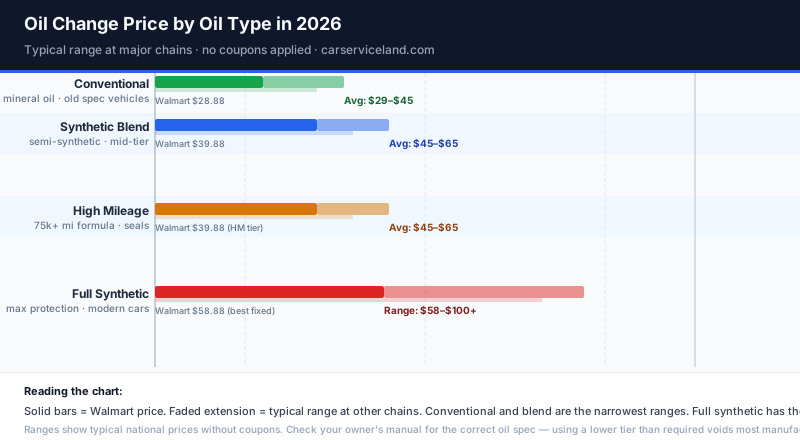
Oil change prices by type, at a glance: conventional $29-$45, synthetic blend $25-$50, high mileage $49-$100, full synthetic $58-$100+. Those ranges hold across most major chains – but the right oil type for your vehicle isn’t a price decision, it’s a specification decision.
When I was working at Jiffy Lube, I watched the menu board confuse people constantly. Four tiers, four prices, and most customers had never read their owner’s manual. The most common mistake: picking conventional because it was cheapest, not because it was correct. That’s a false economy – conventional oil in an engine specified for synthetic doesn’t last as long between changes, and the lower per-service cost can disappear entirely once you’re changing it more frequently. The right frame isn’t “which is cheapest” but “which tier does my car require, and what’s the best price for that tier?”
Price Comparison by Oil Type
| Oil type | Price examples from current chain pages | Typical price position |
|---|---|---|
| Conventional | Walmart $28.88 (Pit Crew); Pep Boys $45.00; Midas local pages $19.99-$39.99 | Lowest tier |
| Synthetic blend | Midas local pages $24.99-$49.99 depending on page or coupon | Middle tier |
| High mileage | Walmart $48.88; Pep Boys HM synthetic blend $78.00; Pep Boys HM full synthetic $100.00 | Variable – depends on base oil formula |
| Full synthetic | Walmart $58.88; Pep Boys $100.00; Midas local pages $39.99-$79.99 | Highest standard tier |
Conventional: Cheapest Tier, Narrower Application Than Most Drivers Think
Conventional is still the lowest-priced option at every chain. Walmart’s $28.88 Pit Crew is the cleanest public price anchor in the entire market – a fixed national number you can quote without a location-specific caveat. Firestone has run conventional oil change offers in roughly that same neighborhood, but their coupon mix shifts often enough that I won’t pin a number to it here; check their current offers page before you drive over. But the critical qualifier is the owner’s manual – conventional is only a legitimate choice if the manufacturer allows it. For a large share of vehicles built in the past 10-15 years, it isn’t. For current conventional pricing across all chains, the conventional oil change price guide has the numbers.
Synthetic Blend: True Middle-Ground When It Applies
Synthetic blend exists in the middle of the price tier because it’s in the middle of the protection tier. It uses a mix of conventional and synthetic base oils and performs meaningfully better than straight conventional in tougher conditions. The local Midas pages currently show some of the clearest blend pricing available. Just make sure the manual allows blend before using price as the deciding factor.
High Mileage: The Tier That Doesn’t Sit in One Price Slot
High mileage is the most confusing oil type to compare by price, because it isn’t really one price tier. High mileage oil is defined by its additive profile – seal conditioners, wear support for older engines – but the base oil can be conventional, synthetic blend, or full synthetic. That’s why the price range for “high mileage” runs from Walmart’s $48.88 all the way to Pep Boys’ $100 for high mileage full synthetic. The two products are not the same thing, they just share the “high mileage” label. For a deeper breakdown of what separates these categories, the high mileage vs synthetic oil change guide runs the comparison directly.
Full Synthetic: Highest Standard Tier and Often Not Optional
Full synthetic is the highest standard price tier, but for many modern vehicles it’s also the only acceptable option. The manufacturer specifies it, and using a cheaper oil type can affect warranty coverage and require more frequent changes. Walmart offers the clearest public anchor ($58.88) among the major chains for full synthetic. Pep Boys’ $100 reflects a more service-center-heavy approach, and Midas local pricing can range widely depending on location and coupons.
The Rule That Makes All Four Tiers Make Sense
Start with the owner’s manual, not the cheapest price on the board. The manual tells you which oil types are acceptable for your specific engine. Once you know what’s compatible, price comparison becomes useful. Before that, you’re potentially shopping for a service your vehicle doesn’t qualify for.
Cheap conventional oil is only a deal if your car actually takes conventional. Full synthetic isn’t an upgrade if it’s what the car requires – it’s just the correct service. Once you know your correct tier, the current best oil change deal shows what’s currently active across all chains for that specific oil type.
What Most Drivers Get Wrong About Oil Type Pricing
The menu board creates a false hierarchy. Four tiers, four prices – it looks like a quality ranking where you pick the one you can afford. It isn’t. The tiers aren’t quality levels on a universal scale; they’re different products for different engine specifications. Picking conventional because it’s cheapest on a 2018 Honda Accord is like buying the wrong size bolt because it was cheaper at the hardware store. It fits wrong and costs more eventually.
The frame that actually works: find out which tier your car requires (owner’s manual, 30 seconds), then find the best price for exactly that tier. Everything else on the menu is irrelevant to you. I still hear from readers who “upgraded” to full synthetic on older cars that called for conventional and wonder if they got anything for the extra money. Answer: probably not much. Start with what your car takes. Then compare prices. For recommended service intervals by oil type and vehicle, the how often should you change your oil guide covers what manufacturers actually recommend.
Jake’s Take
The oil type determines which price column you’re in – and the columns are far apart. Conventional runs $25-$45 at most chains. Full synthetic runs $55-$100 for the same visit. Knowing your vehicle’s spec before you walk in is the single most useful thing you can do, because chains will upsell you to a higher tier if you express any uncertainty. Check your owner’s manual, confirm the viscosity (5W-30, 0W-20, etc.), and tell them exactly what you want. That one sentence of clarity at the counter saves you $20-$40 at shops that push upgrades.
Frequently Asked Questions
Which oil type is always the cheapest?
Conventional is consistently the lowest tier at every major chain. Walmart’s Pit Crew package is currently the easiest sub-$30 conventional anchor.
Is full synthetic always the most expensive?
Among standard oil type tiers, yes. Full synthetic consistently sits above conventional and blend. Local coupons can close the gap at specific locations.
Why does high mileage pricing vary so much?
Because high mileage isn’t a single base oil – it comes in conventional, synthetic blend, and full synthetic versions. The “high mileage” part refers to the additive package, not the underlying oil type. Pep Boys makes this concrete by listing both high mileage blend ($78) and high mileage full synthetic ($100) separately.
Can I use a cheaper oil type to save money?
Only if the owner’s manual allows it. If the manual says full synthetic, running synthetic blend or conventional costs you money in the long run through shortened intervals, potential warranty issues, and engine wear. The cheapest compatible oil is the right call. The cheapest oil regardless of compatibility usually isn’t.
If I’ve always used conventional but my manual says synthetic, should I switch now?
Yes, and you don’t need to worry about damage from the switch itself – modern synthetic oil is compatible with engines that have been running conventional. The more urgent concern is that you may have been operating outside your manufacturer’s spec, which can matter for warranty claims and has potentially shortened service intervals. Going forward, switching to the specified oil type is the right move. If the engine has been running without symptoms, the switch will put you back in spec with no drama. If there’s any concern about accumulated issues, a synthetic with a strong detergent package can help clean out deposits over the next couple of service cycles.
What’s the price difference between high mileage conventional and high mileage synthetic?
Based on publicly available pricing, the gap is significant. Walmart’s high mileage conventional sits around $48.88. Pep Boys’ high mileage synthetic blend is $78. High mileage full synthetic at Pep Boys is $100. The high mileage additive package is similar across those tiers – what you’re paying more for as you go up is the base oil quality and the interval length it supports. If your car requires synthetic and you want high mileage benefits, high mileage synthetic is the correct choice regardless of the price gap from the conventional version.
What’s the cheapest oil type I can put in a vehicle that specifies full synthetic?
There is no legal cheap substitute for a manufacturer-specified full synthetic. If your owner’s manual says full synthetic with a specific viscosity (commonly 0W-20 or 5W-30), that’s the minimum – not a recommendation. Using conventional or synthetic blend when the manual requires full synthetic doesn’t void your warranty automatically, but if an engine problem occurs and the shop can document you were running the wrong oil type, the manufacturer can deny the claim. The practical answer: run what the manual says. The cost difference per oil change is $15-$25. The risk of running the wrong oil for years to save $15 per visit is not a good trade.
Does using the wrong oil type void a manufacturer warranty?
Not automatically, but it gives the manufacturer grounds to investigate. Under the Magnuson-Moss Warranty Act, a manufacturer cannot void your entire warranty just because you used a different (but still API-certified) oil brand. However, if you use the wrong viscosity or oil type for your vehicle spec – particularly if you put conventional in an engine that requires full synthetic – and the engine develops a lubrication-related failure during the warranty period, the manufacturer can deny coverage for that specific failure if they can document the mismatch. The safest path: keep receipts or service records showing the oil type installed at each service. Even a quick-lube chain receipt shows the oil type. That documentation protects you.
Sources
Pricing from official chain pages and local store pages, re-checked June 2026.

About the Author
Jake Morrison
Jake spent three years working the pit at a Jiffy Lube in Garland, Texas – which means he’s seen every oil change upsell in the book and knows exactly which ones are legitimate. His 2021 RAM 1500 5.7L Hemi takes 8 quarts of full synthetic, so he’s personally acquainted with how fast an advertised price can balloon at checkout. At carserviceland.com he tracks what chains actually post versus what drivers actually pay.